
Child-first Coaching Philosophy
Why children's rights matter. Reflections on a child-first approach to coaching.
Dr Alex Twitchen has been a qualified football coach for over 35 years. As a Senior Lecturer in Sports Coaching: Practice and Learning, he brings a wealth of experience as a coach educator, developer, and mentor. Alex , has a passion for understanding and exploring how coaches learn and improve their practice. Increasingly Alex has been exploring the application of child-rights to coaching and the extent to which rights underpin safe practice.
With his knowledge of children's rights and experience of coaching, we have asked Alex to reflect more deeply about his approach to child-first coaching to offer some practical insight. In the content below Alex examines:
- Child-centred or child-first coaching
- Liphook Spiders. A games-based approach
- Incorporating voice into your coaching process
- Creating playful environments
- Holistic development
- Top tips to enable every child to realise their rights
Interested to learn more about Dr Alex Twitchen, check out our Podcast episode with him.

What does child-first and child-centred coaching mean to you?

By Dr. Alex Twitchen. There is arguably not a significant difference in practice between being child-centred and child-first, but there is, I would argue, a sufficient difference that enhances the experience of the children and young people being coached.
Being child-centred is what I refer to as a ‘pedagogical choice’, it is a decision informed by a coach’s approach to how they coach and what they coach. It can be observed in their behaviours and tends to be primarily informed by a knowledge and understanding of how children and young people develop and become more skilful athletes. To me being child-centred means that the child and their interests are central to the pedagogical decisions made by coaches.
Child-first coaching is different. It is not a pedagogical choice that coaches can exercise, instead it is a duty, there is no choice about it. As adults it is the duty of every coach to support every child and young person realise their rights. The legal rights that children possess, as described in the United Nations Convention on the Rights of the Child (UNCRC,) come before any type of pedagogical choice that coaches make.
This, in my view, is the essential difference between child-centred and child-first. The former is led by the pedagogical choices coaches make, the latter is led by the rights of the child that subsequently inform the pedagogical choices coaches make.
Case Study: Liphook Spiders

I have witnessed the difference between child-first coaching and child-centre coaching whilst coaching a grassroots football team, the Liphook Spiders, over the course of a season. Have a read of my experiences in this summary, as I delve into what a child-first approach to coaching means in practice, in a real-life situation. My downloadable case study includes:
- Building rapport with participants
- Enabling young people to take the lead on their own learning and development
- Co-created playful practice plans
- Example practice plans
- Player / Coach Development Framework
Incorporating voice into the coaching process
The Lundy Model is a well-known approach to practically supporting the realisation of Article 12 of the UNCRC. This Article entitles children with the right to freely express their views when they are capable of doing so, and that these views should be given due weight according to the age and maturity of the child.
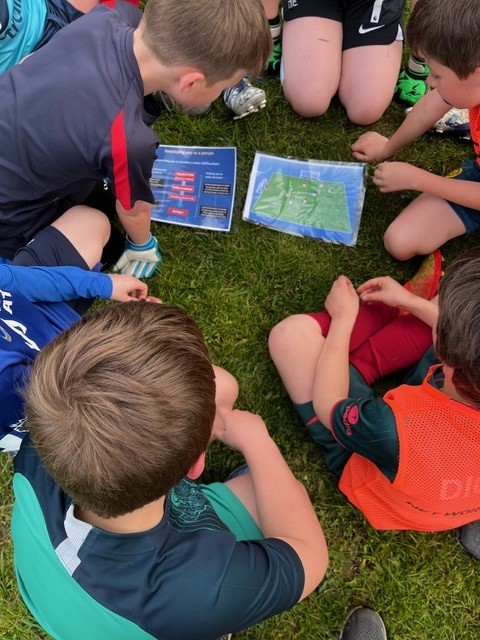
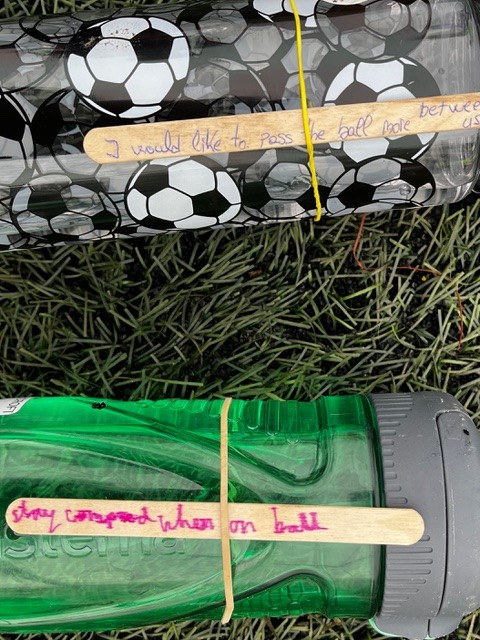
Young people are capable of forming and expressing their own views when given the appropriate space and opportunity, and I believe that by building relationships with them they will be free to do so. In essence the approach I took with my team, the Liphook Spiders, was to incorporate the Lundy Model into the process of Plan-Coach-Reflect. This approach provides structure to support every childs right to express their views and opinions in a meaningful way.
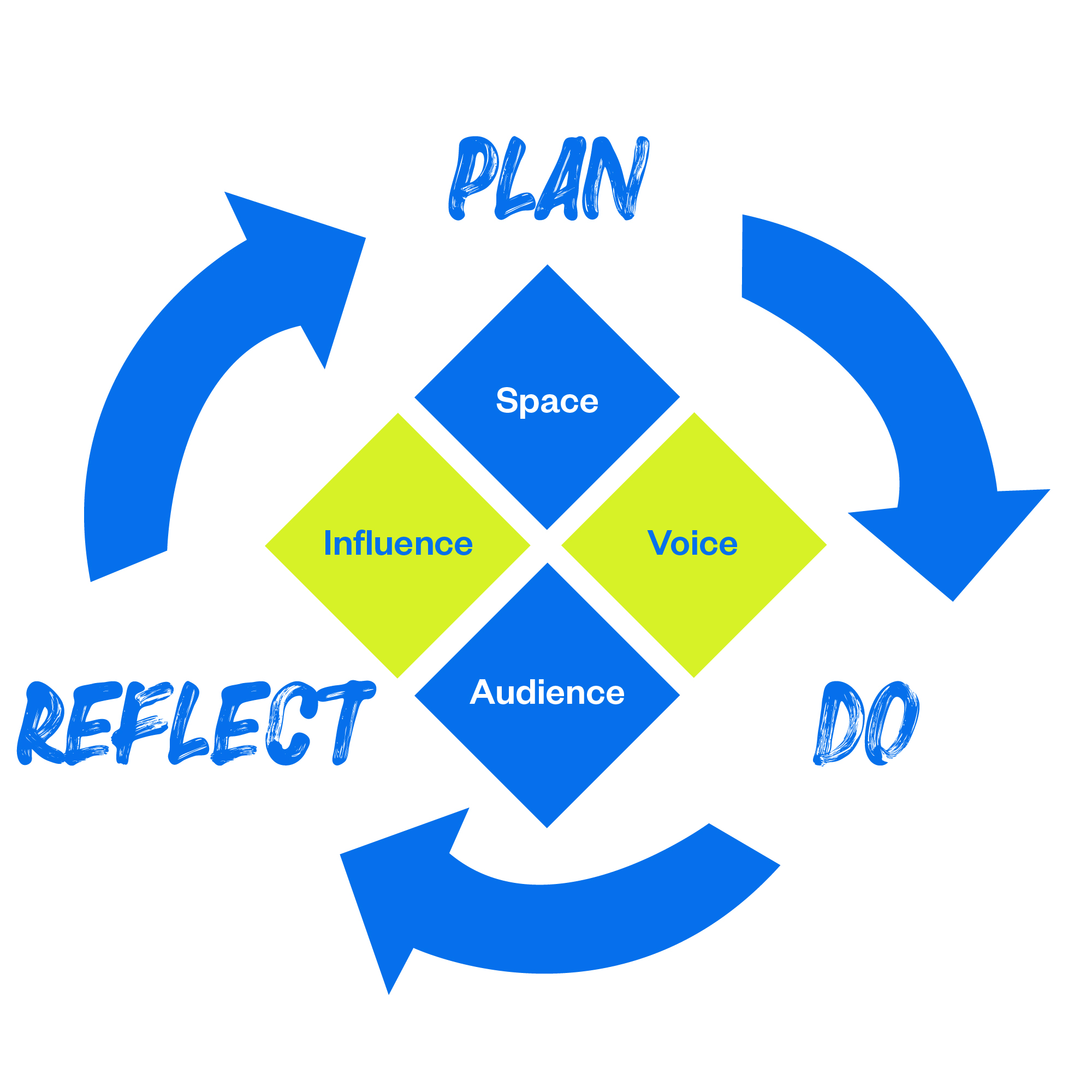
The voices of the children become integral to the coaching process such that it becomes a shared process. This approach also recognises the agency and competence of the children, and it enables the balance of power between us as adults and the children to become less uneven.
- How can you provide the structure and space to support children to express their views in a meaningful way?
- How could you use questioning to give children a voice and support their learning in practices?
Player and coach development framework


Creating playful environments
Article 31 of the UNCRC is often referred to as the article that provides children with the right to play. It does, but it also states that children have the right to engage in recreational activities as well as play. General Comment 17 (GC17), published by the UN Committee on the Rights of the Child in 2013, provides such clarification for Article 31. GC17 supports an approach to coaching that maintains a play-like and playful environment, which is appropriately supported by coaches and enables every child to realise their right to play and engage in recreational activities.

Top Tips
My own increasing awareness of child’s rights, and the extent to which they now inform my coaching has been developing and evolving for the past five years. It has made me a more effective coach and it has challenged me to reflect on some long-held beliefs, such as I’m not the person who is always responsible for planning and preparing the activities for the children, this can be undertaken with children. It has also enabled me to better connect and interpret different theories and concepts to a central purpose – how do they enable every child to realise their rights? From this experience here are my top tips:
Children are far more capable and competent than we as coaches often give them credit for. It is partly how we embody a particular idea about ‘childhood’ that influences what and how we coach. It is not children who have to change, instead it us as coaches who need to think differently and question our assumptions that childhood means children lack capability, responsibility and competence. They don’t.
Every child is their own unique person, and you should explore and find different ways for children to participate and contribute their views. Employing a range of methods will enable each child to find the ones which they are confident with.
Having a good knowledge and understanding is sufficient. There is also a growing range of resources that can help you develop this knowledge. However, once you open the window into the world of child’s rights it can become a fascinating area to explore further. In terms of sport, we are probably only uncovering the surface of the possibilities that coaches can learn from. It has made me see so many common and taken for granted aspects of coaching children and young people that I would now question differently.
One of the general principles of the UNCRC is Article 3 – The best interests of the child. In any decision you make as a coach ask yourself - is this really in the best interests of a child or a group of children? Whilst it has been argued that ‘best interests’ is an empty and vague concept, it is often a good place to start deciding what is best for children and young people and therefore a guide for your decisions.
Respecting, promoting and protecting child’s rights is a way of understanding children as human beings who are not adults in the making but citizens of the present. They possess their own agency, and our duty as coaches is to enable them to exercise this agency to thrive and develop and become the person they want to be.
Adopting a rights-based, child-first approach is a process of learning and reflection. It takes time and a willingness to try new things and often give children more responsibility, more space, more power and more autonomy than you might be comfortable with. Equally children will have embodied their own interpretation and understanding of coaching. They will have an expectation of what you as a coach will do. Part of the initial learning process is enabling children and young people themselves to think differently about coaching.
A rights-based approach does not mean children and young people make all the decisions, or suddenly become the powerful partner in a coaching relationship. Neither does it undermine, de-skill or make ‘the coach’ redundant. On the contrary a child-first approach is a highly skilled form of coaching. It requires a knowledge of your sport, alongside a knowledge of pedagogy, skill development and leadership, and many other forms of knowledge. It does mean however that you use this knowledge differently to create a different kind of coaching environment.
Perhaps the best form of coach development is learning from the children and young people you coach! They can be very quick, very direct and very honest with their feedback, just give them the opportunity to do this, especially when you have developed a positive, safe and participatory environment based on their rights.
Child’s rights apply to every child, everywhere, all the time. They are universal. It doesn’t matter if you coach in grassroots sport or if you coach the most talented children and young people in the country, they are all equal in terms of the rights they are entitled to. What changes is what I refer to as the ‘tension-balance’ between rights which often requires different solutions in different contexts. For example, in a talent environment there is often a tension between the right to develop a child’s talent without violating their rights to a quality education, appropriate rest and protection from economic exploitation. Finding the right balance between these rights is an integral aspect of skilful coaching.