
Pan-disability in Football: Building on Voice, Choice and Journey
 Article
 by Craig Smith
Pan-disability coach and proud father Simon Sibley talks about his coaching experiences with his sons’ football team, including the journey that he has been on, as well as the development the players, including both of his sons, have made.

The words of Weston Ability FC coach Simon Sibley, who has spent the last year coaching one of his sons’ pan-disability football teams, as they develop not only their footballing skills, but also develop as people.
WAFC embody not only the proper spirit of the ‘beautiful game’ but also what it really means for children to Play Their Way, with parents encouraged to be supportive and kind at all times. This means they come and enjoy games without pressuring referees or giving unsolicited advice to coaches – a culture that is sometimes prevalent in other grassroots sports.
WAFC is a pan-disability football club that has players from seven years old through to adults who have various disabilities and/or additional needs. Currently, they train and play under the umbrella of the Somerset Ability Counts League, which promotes a safe and inclusive environment for all players.
With pan-disability football, there are significant differences in how the games are played and how children are coached. It differs to other specific sporting impairments such as blind, cerebral palsy or deaf football players in a number of ways. For example, pan-disability teams play all together, across a broad range of ages, with differing knowledge levels of the game too. At WAFC so much is put into helping children to develop. Simon said:
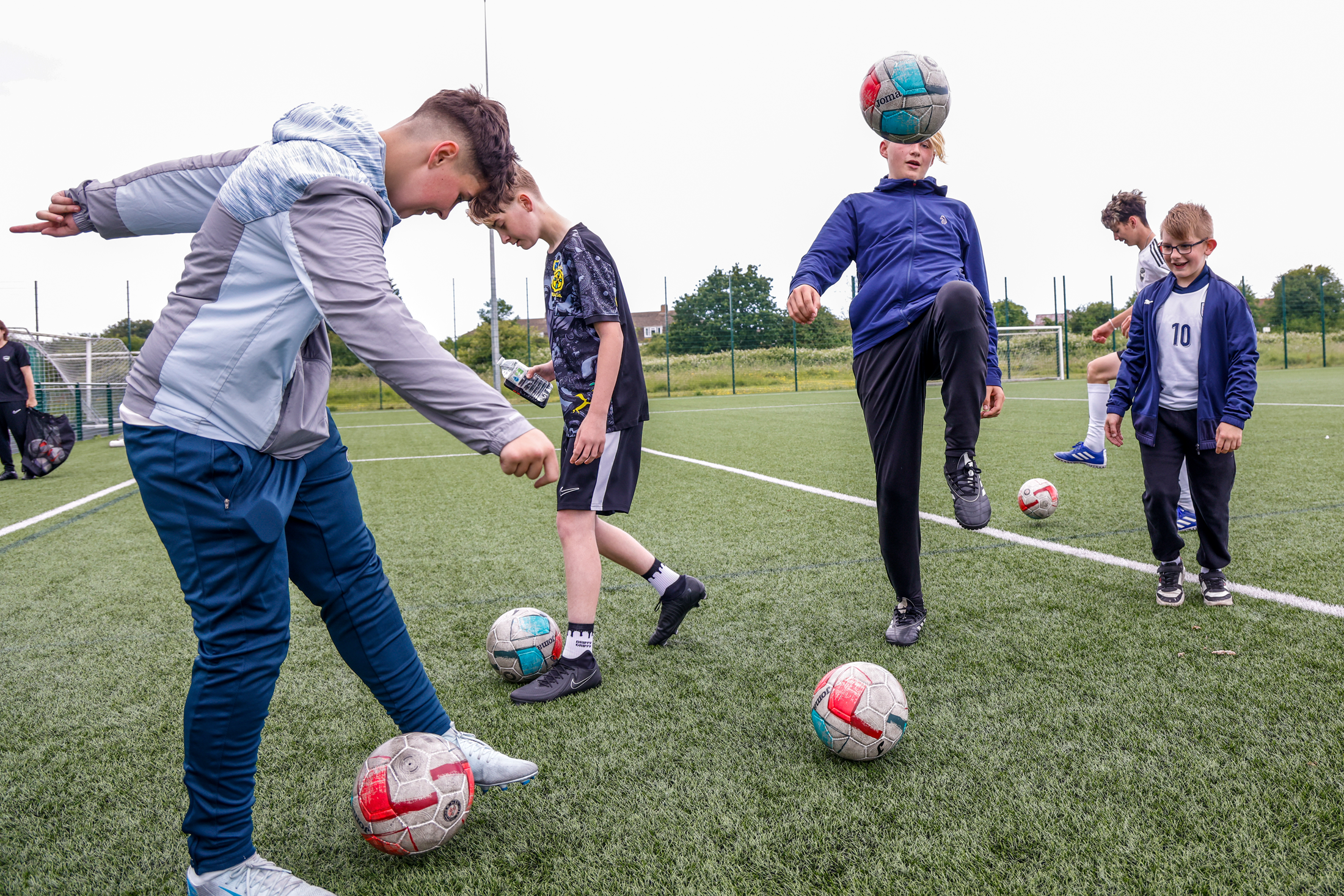
“When we introduce a player, we make sure that we talk to them regularly and help them settle into the new environment. It will take a few sessions get to know them and how they interact with the team but that’s ok.”
“The club posted on LinkedIn recently regarding the love that these children have for the game, just playing. Their energy, determination, and everything they do is more than quite a lot of mainstream footballers, because especially children with autism or ADHD, if they focus on one thing - that is life. So they know the ins and outs of everything, they will train 110 per cent, they will give everything, and that enthusiasm and the love of the actual game is there, they're not just there to be there.”
Pan-disability football does its best to remove confrontation and some of the negative aspects – e.g. diving, by not allowing slide tackling, a rule that is often applied to grassroots teams until they reach a certain age. The games are played with a maximum of seven-a-side, with smaller pitches and roll-on, roll-off substitutes.

The season runs from October to May, with a game day every month. On that day, between 9am and 12pm, 15-minute games are held between a number of teams, giving the children a ‘competition’ to participate in regularly.
This is Simon’s first venture into any coaching role, and he did so purely so that his sons – aged 13 and 9, could have a safe space to go and learn to play football. He said: “It was a case of; they were cooped up in the house and had no interest in doing anything at all. However, they started taking an interest when I was watching football at home, and then all of a sudden something clicked and they wanted to be outside, they wanted to join a football club.”
Simon looked at a number of grassroots teams but couldn’t find anything to suit his children’s needs or footballing ability, until some considerable ‘digging’ led him to Weston Ability.
You could see the change and how included they were straight away, and from being unconfident and non-verbal, they’re both captains within their age groups,"
Simon Sibley, Weston Ability FC Football Coach
Now, after being with the club for just over a year, it’s like they’re completely different and their confidence has shone. Then teachers started noticing at school that new friendships were being made, so it grows way outside of just football.”
When it comes to Play Their Way, Simon thinks that although it’s an extremely positive initiative, it’s disappointing that it isn’t more common knowledge amongst coaches and even parents.
He said: “It's a great initiative and starting point, but it's also sad the fact that they're having to spread the word still. People need to be made aware that a voice and choice isn't just verbal, it needs to be visually communicated with hand gestures if needed or another way. And the same with a journey, it's never the outcome, it's the effort, it's the turning up, it's the 10 minutes staying that they wouldn't usually stay for a training session.
“So, for new people learning it, I think that's the only way you could change things, to know that voice, choice, journey is the starting point and then building it from there. As long as you have a good foundation that you know is a safe, positive environment to train, then that encourages children to play in the first place. But then, as a coach, if you're welcoming them and engaging them with their actual name, asking open-ended questions, it's OK to give them a ball straight away and let them knock it about. This is just being human, being yourself as you should be. You’re more than a coach at pan-disability football level – you’re just you.”
Weston Ability Coaching Tips
Inspired by Simon Sibley's child-first coaching techniques
DOWNLOAD NOW

At Weston Ability, the impact DOES extend to the parents, too. They are taken on the journey with their children and made to not only understand the team and the coach’s methods but feel them and live them. Everyone is greeted the same, made to feel welcome – both parents and players – and told of the strict code of conduct that needs to be adhered to.
Simon said this is so parents understand that they’re entering a positive atmosphere, where children are encouraged, and behaviour on the sidelines remains positive at all times.
Everyone is there for the same reason. It’s often like a coffee morning type session for the parents where they can talk to each other about situations that have happened with their children in the week and talk about how they handled it and what they did, so it’s positive for them to talk and learn from each other too.”
Simon Sibley, Weston Ability FC Football Coach
As you move through your journey as a coach, remember what made you become a coach in the first place.
Simon said: “My favourite thing about being a coach is seeing the journey. That may be cliche and may sound boring, but it is because we're sometimes helping players that don't know what a football is, they're even bouncing the ball with their hands like a basketball in the first few sessions, but then, within a month they will ask, 'oh, is this the throw-in or is this the goal kick?'
“You can see the development, and it brings you out as a coach because you walk them through an activity or practice right from the start. You have to learn to be adaptable and flexible because I make sure the activities are tailored for each individual coming that day."
To learn more about child-first coaching, visit your coach dashboard.
Other resources that you may like...
About the contributor
Simon Sibley is a football coach at Weston Ability FC, which is a pan-disability football club in Weston-Super-Mare. The club was set up by Dave Edmonds who wanted to create a football club where people of all ages and all abilities felt welcome and safe. Weston Ability provide training sessions for children and adults. They train on Sundays with children's sessions from 9am-12pm and adult sessions 12:30pm-4:30pm. To find out more about the club check out their facebook page or contact them via email.
SHARE THE MOVEMENT
Help spread the word by sharing this website with fellow coaches!